
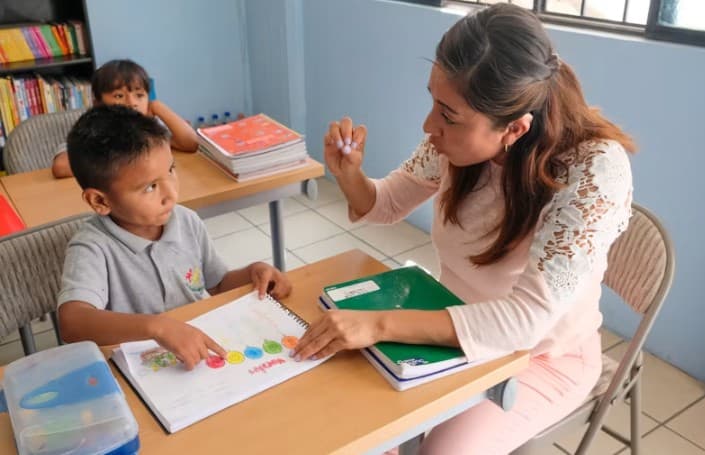
A few years ago, education student Suzie Alev worked closely with a seven year old boy named Evan, who was autistic. Like many educators, she wanted to help him learn and succeed.
She soon discovered that teaching Evan was not only about lessons, schedules, or academic goals. It was about understanding his emotions.
As Suzie spent time with Evan and his family, she began to see the world through his eyes. She learned that many behaviors others might misunderstand were often expressions of feelings, needs, or challenges that Evan could not easily communicate.
That experience transformed the way she viewed teaching and reminded her that every child has a story behind their behavior.
Source: Teacher Magazine, “Evan’s Story” by Suzie Alev.) ([Teacher Magazine][1])
Many educators working with neurodivergent students face a similar challenge.
A student suddenly shuts down during class.
Another becomes frustrated and refuses to participate.
One student seems distracted while another appears angry.
The behavior is easy to see.
The emotion behind it is often harder to understand. This is where emotional tools become so valuable.
 Image by Markus Winkler
Every Behavior Has a Story
One of the biggest mistakes educators make is assuming that behavior is the problem.
Often, behavior is communication.
A student who covers their ears may not be defiant. They may be overwhelmed by noise.
A student who avoids eye contact may not be disrespectful. They may be concentrating on processing information.
A student who appears withdrawn may be dealing with anxiety, sensory overload, or frustration.
When educators learn to pause and ask, “What might this student be feeling right now?” everything will begin to change.
Emotional Tools Create Understanding
Emotional tools will help you uncover what students may struggle to express with words.
Simple tools can make a remarkable difference.
Emotion charts can help students identify feelings.
Visual scales can help them communicate levels of stress or discomfort.
Check in routines can help students share how they are feeling before challenges escalate.
Journals, drawings, and visual storytelling can also provide insights into a student’s emotional world.
These tools are not only strategies, they are also bridges.
They will help you move from assumptions to understanding.
Before We Teach, We Need to Connect
Many neurodivergent students spend their day being corrected.
- Sit still
- Pay attention
- Stop doing that
- Try harder
Over time, constant correction can create frustration and disconnection.
But when you focus on connection first, students feel safer.
- A student who feels understood is more likely to trust.
- A student who trusts is more likely to engage.
- A student who engages is more likely to learn.
The goal is not simply managing behavior.
The goal is building relationships.
 Image by Count Chris
What Happens When Students Feel Understood
Research continues to show that emotional understanding plays an important role in student participation and success.
Educators who develop stronger emotional awareness are often better equipped to support neurodivergent learners in inclusive environments.
- Every student wants to feel seen.
- Every student wants to feel heard.
- Every student wants to know that someone understands them.
For neurodivergent learners, understanding can be life changing.
As an educator, you may not always have all the answers.
- You can choose curiosity over judgment.
- You can choose empathy over assumptions.
- You can choose connection over correction.
When you do, you create classrooms where neurodivergent students do not only survive, but also thrive.
Sometimes, the most powerful teaching tool is not found in a curriculum guide. It is found in a willingness to understand the emotions behind the behavior.
About Prof. Sherley Louis
Prof. Sherley Louis is a Head of Inclusion and inclusive education expert based in the UAE. She supports neurodivergent learners, families, and educators through practical strategies, parent guidance, and inclusive education resources.
More practical strategies and educational resources are available at sherleylouis.com
You can also follow @professorsherleylouis for ongoing parent support and inclusion content.